Designing a POC Dashboard to Simplify Navigation and Decision-makiing for Policymakers across India
When I was handed the opportunity to design a Proof of Concept for India’s Integrated Reservoir Management system, I knew immediately that this wasn’t just another dashboard project, it was a chance to shape how policymakers across the country understood, managed, and protected one of our most critical resources: water.
My Role
Designer
Domain
Water Resources Management & Hydrology
Team
1 Designer, 1 Design Principal
Project Type
Proof of Concept creation
Tools
Figma, Google Suite
Timeline
2 Weeks
Challenge
Transform overwhelming volumes of hydrology data into dashboards that felt intuitive, purposeful, and effortless to navigate. Policymakers needed insights at a glance, not numbers they had to wrestle with.
Starting with the existing system
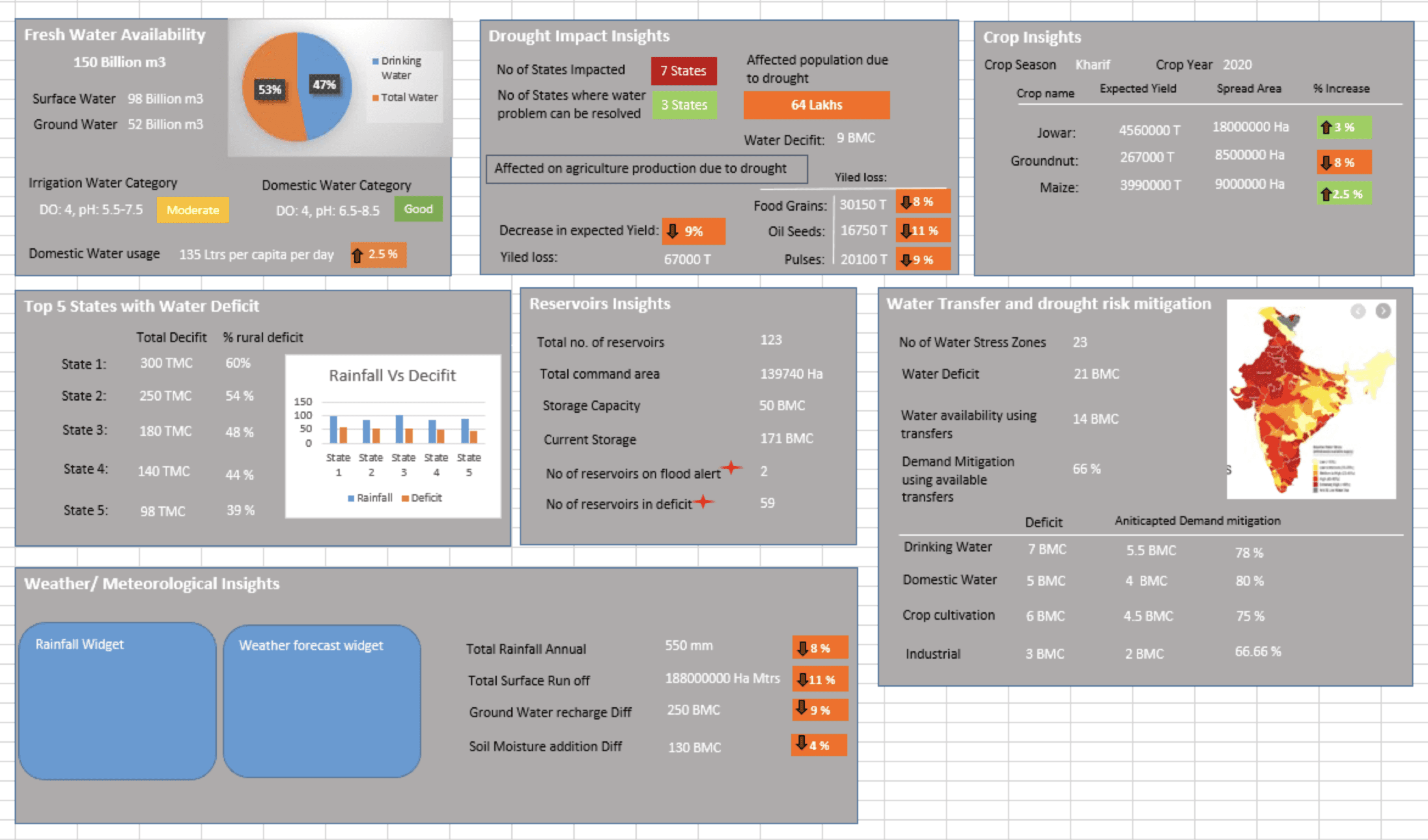
The older design was functional, but far from friendly. Due to government restrictions, I couldn’t explore the full system end-to-end—but even from what I could access, it was clear where improvements were needed. Dense data tables, unclear hierarchy, and dated visuals made navigation slow and interpretation even slower.
Figure shows: SWOT Analysis on Figjam.
And for a nation-wide system that informed flood alerts, drought planning, reservoir management, and water distribution—slow wasn’t an option.
Designing with purpose
I began by understanding the priorities identified by business and pre-sales teams: clarity, speed, and confidence in decision-making.
01
My mission became simple:
Make vast, complex information feel light. Make it feel actionable. Make it feel like something anyone could understand at a glance.
Using clear visual storytelling—charts, infographics, color-coded indicators—I created dashboard mockups to surface the right data at the right time. Every graph, every number, every interaction had a job: reduce cognitive load and increase situational awareness.
State-Level IRM Dashboard
This dashboard focused on the status and behavior of individual reservoirs like Nagarjuna Sagar.
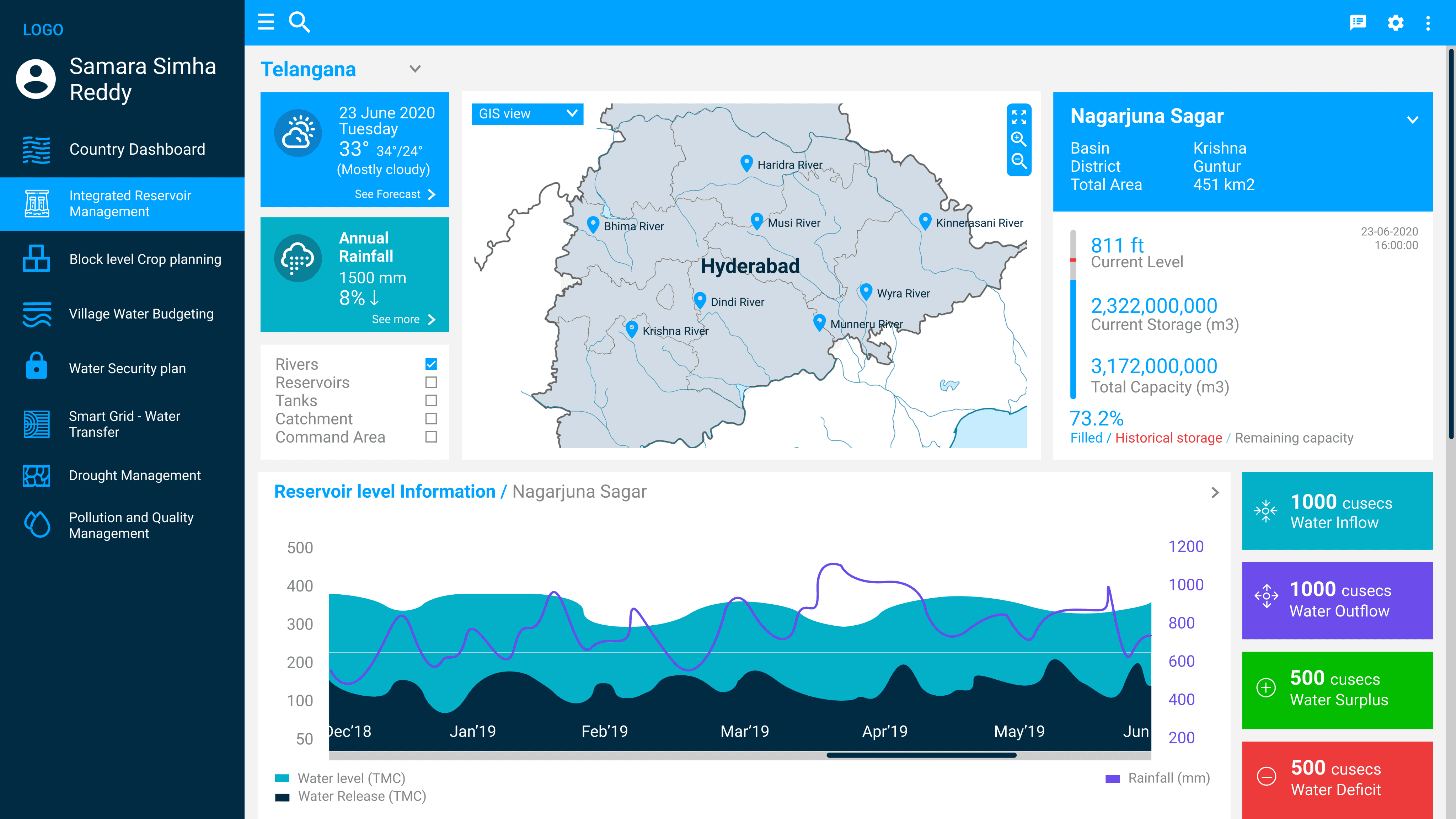
This dashboard focused on the status and behavior of individual reservoirs like Nagarjuna Sagar.
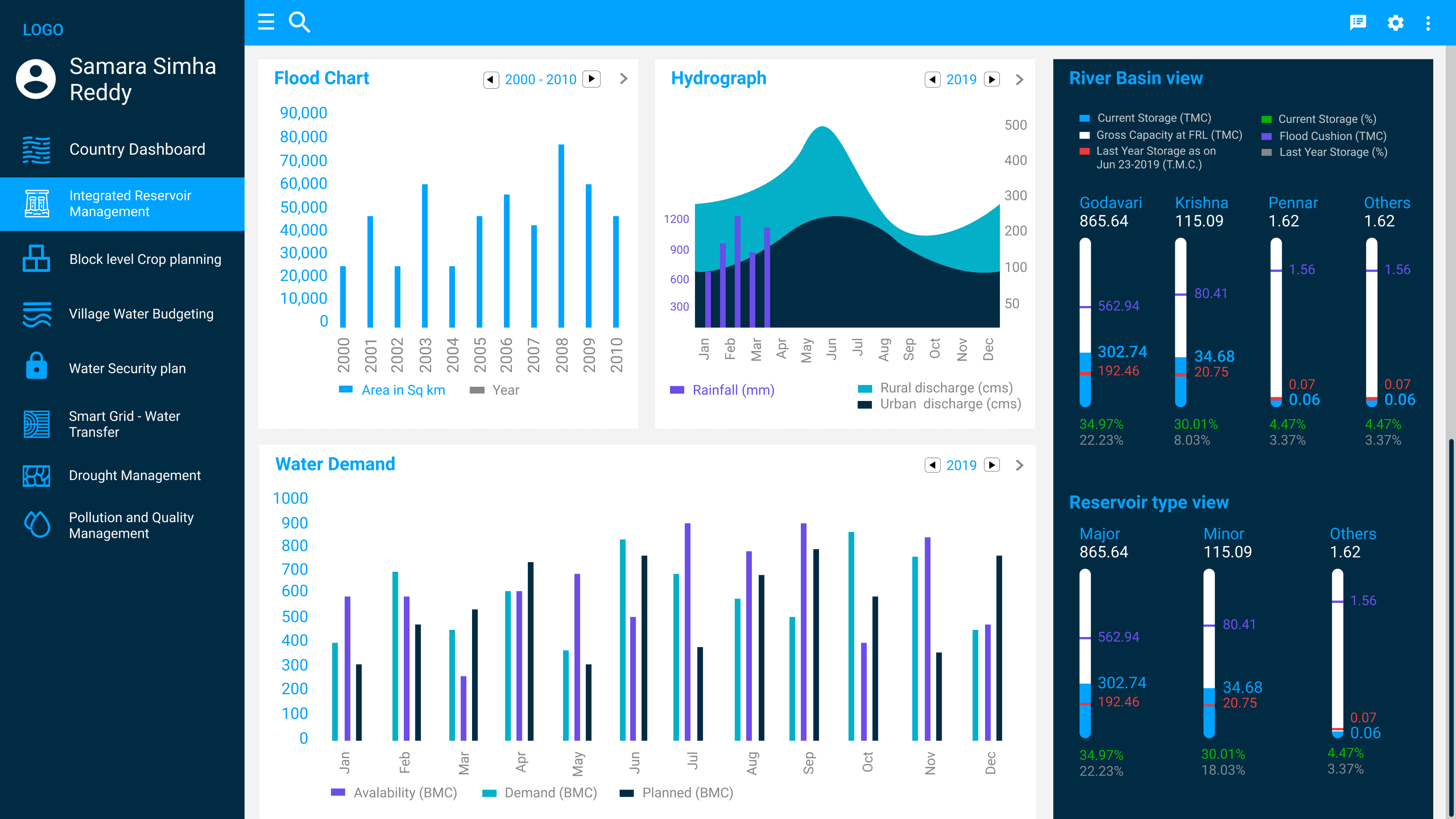
Reservoir levels: Current capacity, water levels, inflow, outflow, rainfall, surplus, deficit
Flood chart: Flood impact areas measured in sq. km
Water demand: Insights on demand vs availability
Hydrograph: Rural & urban discharge against rainfall
River basin view: Water levels across different river systems
Reservoir type view: Classification of major and minor reservoirs
Each section was designed to give policymakers a quick pulse check of local water realities and emerging risks.
Country-Level IRM Dashboard
Here, the goal was to give a top-down view of water availability, risk zones, and national-level insights.
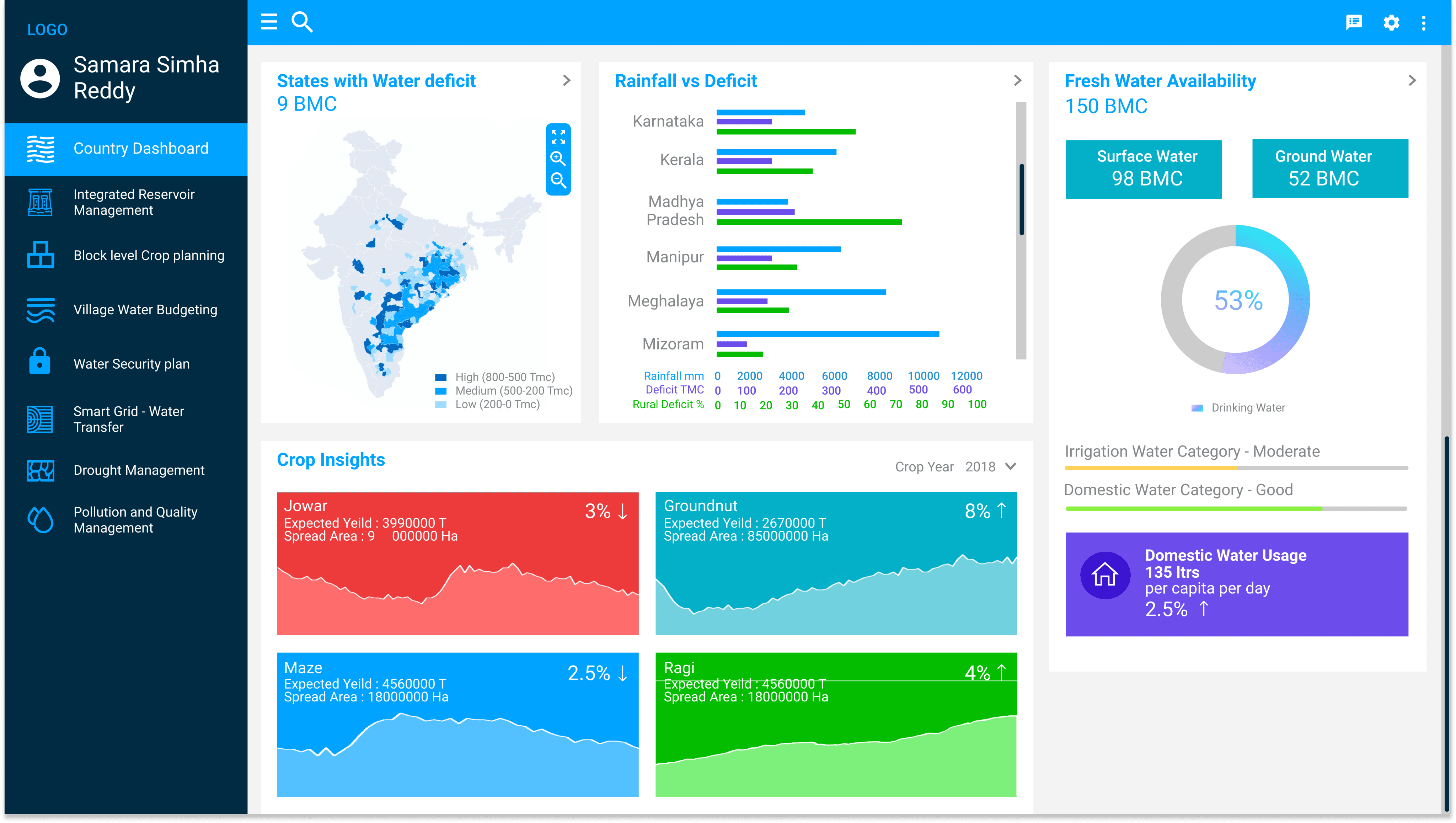
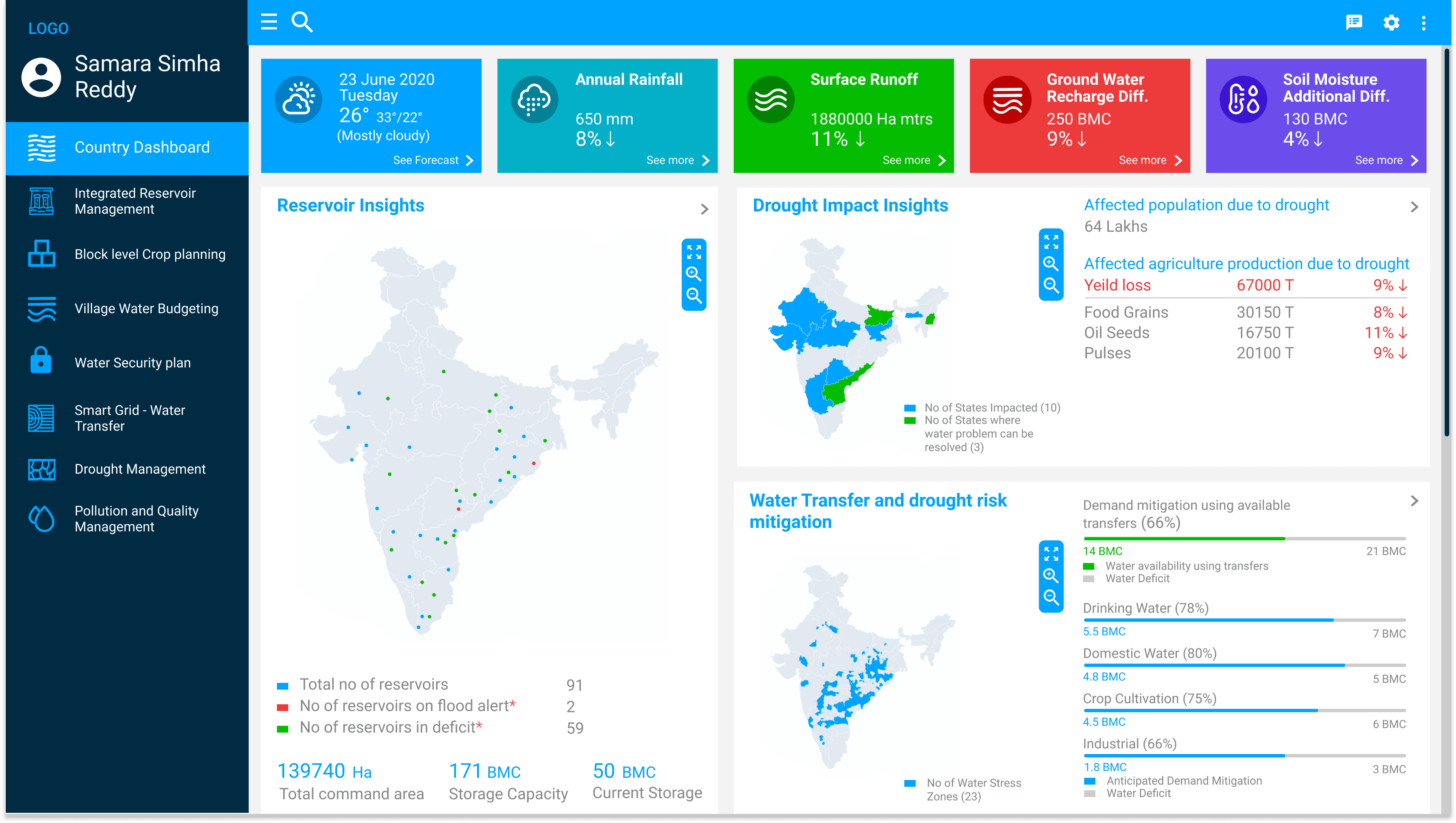
Reservoir insights:
Total reservoirs, flood alerts, deficits
Drought impact:
States affected, states likely to recover
Water transfer & mitigation:
Identification of stress zones
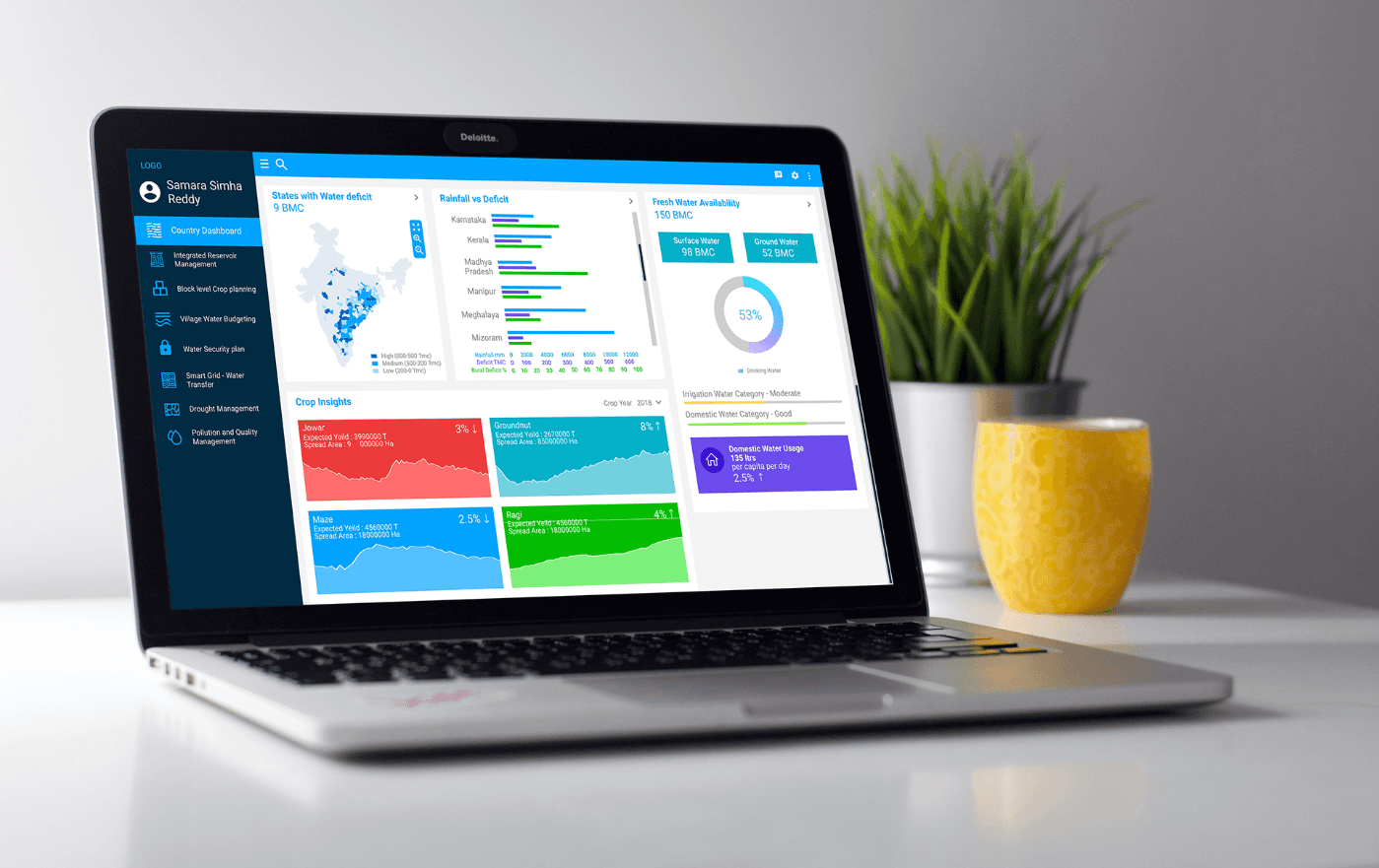
Deficit hotspots:
Rainfall vs deficit correlation
Fresh water availability, crop insights, domestic usage
Reservoir type view: Classification of major and minor reservoirs
Together, these screens helped illustrate India’s water story at scale—from crisis zones to opportunities for intervention.
Conclusion
In the end, the POC wasn’t selected to move forward, and honestly, that stung a little. As a recent grad and junior designer, I had poured so much of myself into it—late nights, anxious iterations, second-guessing every chart and color choice, hoping I was doing justice to a problem much bigger than me.
But after that initial disappointment faded, what stayed with me was how much this project taught me.
I learned what it really means to take something overwhelmingly complex and make it feel understandable.
I learned how heavy it feels to design for decisions that affect real people—not just “users,” but entire communities.
I learned how to work fast without losing the intention behind my choices.
I learned how much effort it takes to make something look simple.
And above everything, I learned resilience. Projects don’t always get picked. Not every design makes it into the world. But every one of them changes you a little—sharpens your instincts, deepens your empathy, and pushes you to grow.
Even though this POC didn’t become a full product, it shaped me in ways I didn’t expect. It made me believe that design, even at the smallest scale, has the power to support better decisions, help more people, and contribute to things that matter—like water, safety, planning, and the wellbeing of millions.
And for a junior designer just starting out, that realization meant everything.